Choosing the Right Fencing for Parks and Recreation Grounds in Derby
When planning a park boundary, the choice of fencing often comes down to two main approaches: open rail fencing and panel fencing. Each serves a different purpose, and the right option depends on the specific needs of the site. For parks in Derby, where you might have a mix of open grass areas, play areas, and footpaths, understanding these options helps you make a practical decision. This article compares open rail fencing and panel fencing for parks, covering when each suits the setting, what to consider for safety, and how to balance visibility with security.
Open Rail Fencing: Maximising Visibility
Open rail fencing uses horizontal or vertical bars with gaps between them. This design allows people to see through the fence, which is often a priority in public spaces. In parks, maintaining sight lines helps with general supervision of the area. If you have a recreation ground where children play or where adults walk dogs, open rail fencing lets you keep an eye on activity without obstruction. It also reduces the feeling of being enclosed, which can make a park feel more welcoming.
From a practical standpoint, open rail fencing works well for boundaries where you want to mark the edge of the park without blocking views. For example, along a footpath that runs next to a road, open rails can prevent people from wandering into traffic while still allowing drivers and pedestrians to see each other. This can improve safety at crossing points and entrances. The gaps also mean less wind resistance, which can be a factor in exposed locations, and the fence tends to collect less debris than solid panels.
Maintenance access is another consideration. Open rail fencing often requires less frequent cleaning because leaves and litter can blow through the gaps rather than building up against the fence. If the park has trees nearby, this can save time on upkeep. However, the posts and rails still need checking for stability, especially in areas with high footfall where people might lean on or climb the fence. Ground anchoring is important here: the posts should be set deep enough and in suitable ground conditions to keep the fence upright over time.
One trade-off is that open rail fencing offers less privacy and less noise reduction. If the park is next to a busy road and the goal is to shield nearby houses from sound, a solid option might be better. But for most park boundaries, the openness is a benefit rather than a drawback.
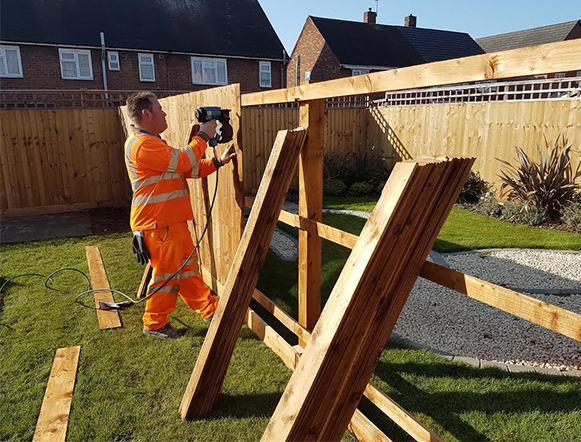
Panel Fencing: Enclosure and Security
Panel fencing, often seen as close-board or featheredge panels, provides a solid barrier. This type of fencing is common in domestic gardens, but it also has a place in parks and public areas. Panel fencing works well when you need to create a secure enclosure around a specific feature, such as a play area, a sports court, or a maintenance depot. The solid surface prevents people from seeing into the space, which can reduce vandalism or unauthorised access.
For a park in Derby, panel fencing around a play area can give parents peace of mind by stopping young children from wandering out onto the road. It also blocks views into the play space from outside, which can help children feel less watched. The solid panels also reduce noise from the play area reaching nearby houses, which is often a concern in residential areas. Similarly, around a sports court or a bin storage area, panel fencing provides a clean, professional look while keeping equipment and waste out of sight.
The main drawback of panel fencing in parks is that it can feel imposing. Long stretches of solid fencing can block views, making the park feel smaller and potentially creating hiding spots. This can affect how safe people feel, especially in areas with low footfall after dark. To address this, many park managers use panel fencing only where needed and combine it with open sections to maintain sight lines. Another consideration is wind loading: solid panels catch the wind, so the posts and fixings need to be robust enough to handle exposed locations. Ground anchoring must be done carefully to prevent the fence from leaning or blowing over.
Panel fencing also requires more upkeep over time. Moisture can get trapped between the panels and the posts, leading to rot or rust depending on the material. Regular painting or treatment is often needed to keep the fence looking good and to extend its lifespan.
Comparing the Two Approaches
When deciding between open rail and panel fencing for a park, think about the function of the boundary. If the goal is to mark the edge of a public space while keeping it open and visible, open rail fencing is usually the better choice. It works around the perimeter of a recreation ground or along a footpath where you want to maintain a sense of openness. It also suits areas where you want to preserve views of the surrounding landscape.
If the goal is to create a secure enclosure around a specific zone, panel fencing is more effective. It provides privacy, reduces noise, and acts as a physical barrier that is harder to climb or see through. For a play area, a tennis court, or a storage compound, panel fencing offers the containment you need. In some cases, a hybrid approach works best: using open rail fencing for most of the boundary and panel fencing only around the most sensitive areas.

Another factor is pedestrian access. Both types of fencing need gates or gaps for people to enter and leave. With open rail fencing, it is easier to integrate a kissing gate or a simple gap because the style is already open. With panel fencing, you need to install a gate that matches the height and style of the panels, which can add to the cost. For maintenance access, a wide gate that can accommodate a vehicle is often necessary, regardless of the fence type.
Visibility is also worth considering from a safety perspective. In parks where people walk at dusk or in winter, having clear sight lines helps everyone feel more secure. Open rail fencing supports this by allowing people to see across the park. Solid fencing can create blind corners where someone could hide. For this reason, many park designers avoid long runs of panel fencing near paths or entrances.
When it comes to safe fencing for public areas, both types can work if installed correctly. The key is to choose the right style for each part of the park and to make sure the installation is done properly. Posts must be set in concrete or suitable ground anchors, and the fence should be free of sharp edges or protruding fixings. Regular inspections help catch any damage early, which is important in a public setting where wear and tear can happen quickly.
Safe fencing for public areas also means thinking about the height and spacing. Open rail fencing should have gaps that are small enough to prevent children from getting their heads stuck, typically no more than 100mm between bars. Panel fencing should be high enough to deter climbing but not so high that it creates a tunnel effect. In play areas, the fence should be at least 1.2 metres high, but local regulations may vary.
Making the Right Choice for Your Park in Derby
The decision between open rail and panel fencing depends on the specific needs of your site. If you manage a park in Derby, start by mapping out the different zones. The perimeter that faces a road might benefit from open rail fencing to keep views open and allow drivers to see pedestrians. The area around a children's play space might need panel fencing to contain little ones and reduce noise for neighbours. The boundary next to a nature area might not need fencing at all, or could use a low open rail to mark the edge without blocking the view.
Think about the long-term maintenance too. Open rail fencing tends to need less frequent painting and cleaning, but it can be more prone to damage from people climbing it. Panel fencing needs more regular treatment but can last many years if looked after. The material also matters: timber, metal, or composite options each have different lifespans and maintenance needs. For parks, durability and low maintenance are often the top priorities, so many choose powder-coated metal open rail fencing or pressure-treated timber panels.

Finally, consider the character of the area. In a formal park with flower beds and paths, a traditional open rail fence might look more appropriate. In a modern housing estate with a neighbourhood play area, panel fencing in a natural colour might fit in better. The fence should complement the surroundings rather than stand out.
By weighing these factors, you can choose the right fencing for your park. Whether you go with open rail or panel fencing, the aim is the same: to create a safe, welcoming space that people enjoy using. With careful planning and proper installation, your park boundary will serve its purpose for years to come.